Early access · invite only
Most training apps tell you well done.STEADY tells you you’re 10 sessions behind.
Adaptive 4-week training blocks for runners and Hyrox athletes. STEADY reads every session you log and tells you what it actually means.
How it works.
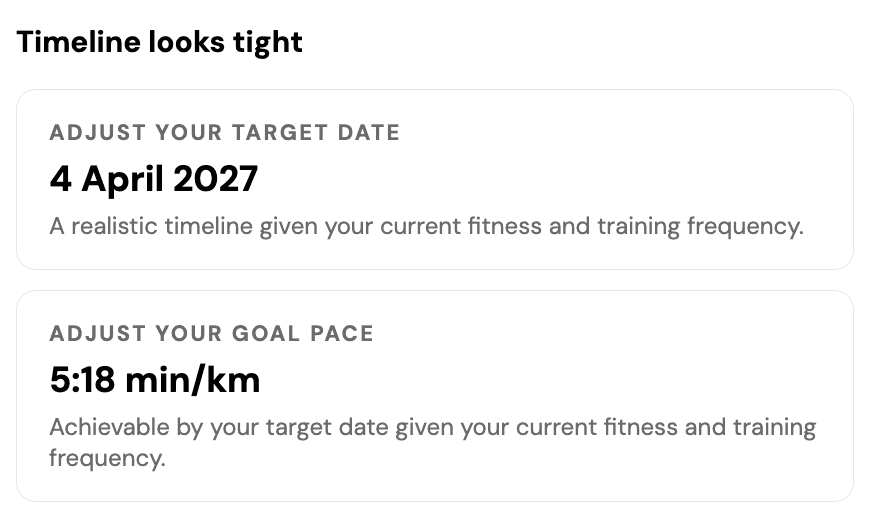
Check your goal is realistic.
Before STEADY builds a plan, it checks whether your goal is achievable given your baseline and target date.
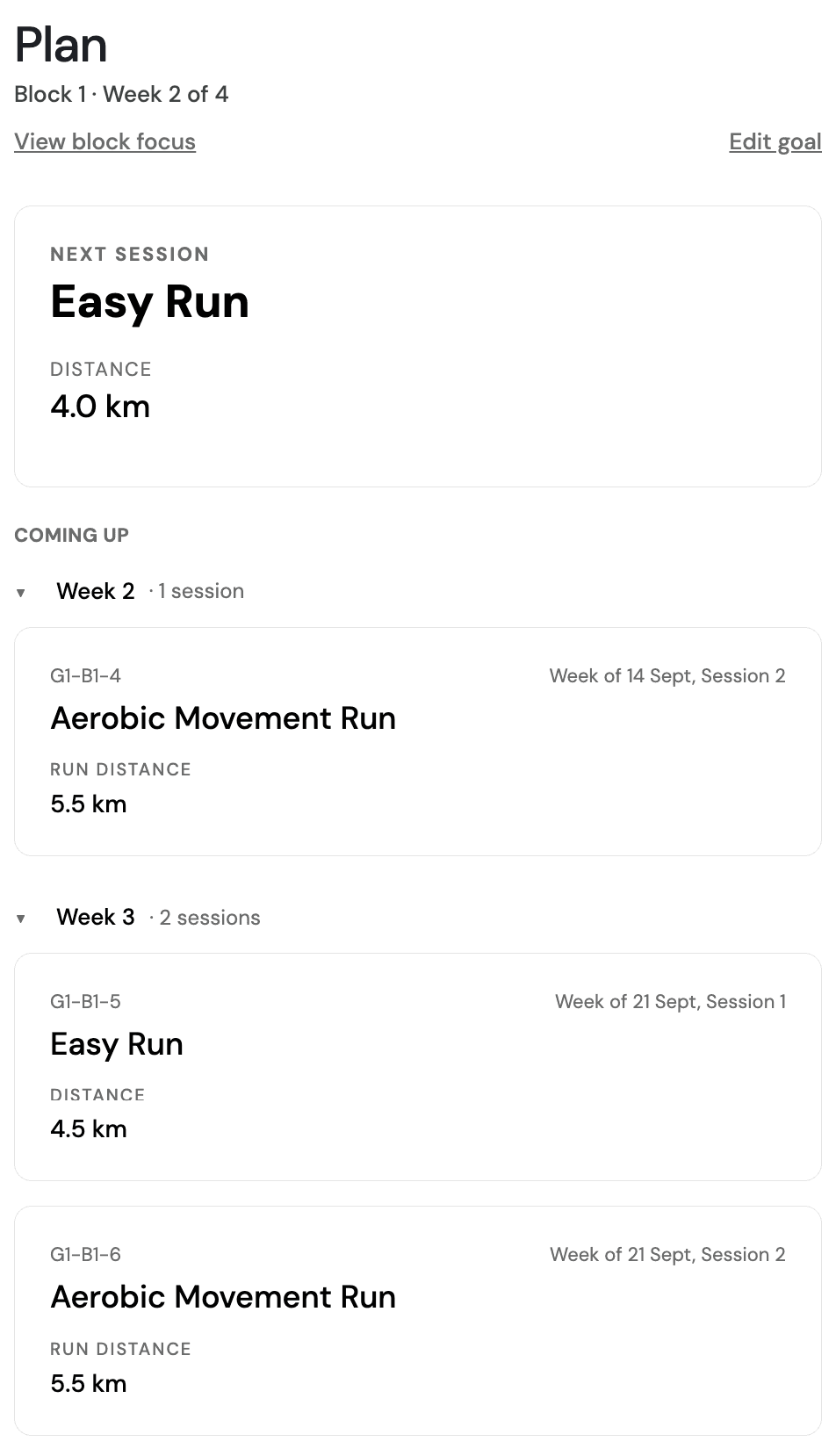
Build a block, not a week.
STEADY generates four weeks of sessions together, covering pace, distance and structure, matched to your goal and frequency. Each new block starts from what the last one showed.
Illustrative figure. Across eight Hyrox rounds, fresh one-kilometre pace stays flat at 5:00 per kilometre while actual pace degrades round by round to 6:10, opening a gap of 1:10 per kilometre by round eight. The gap widens fastest in the closing rounds.
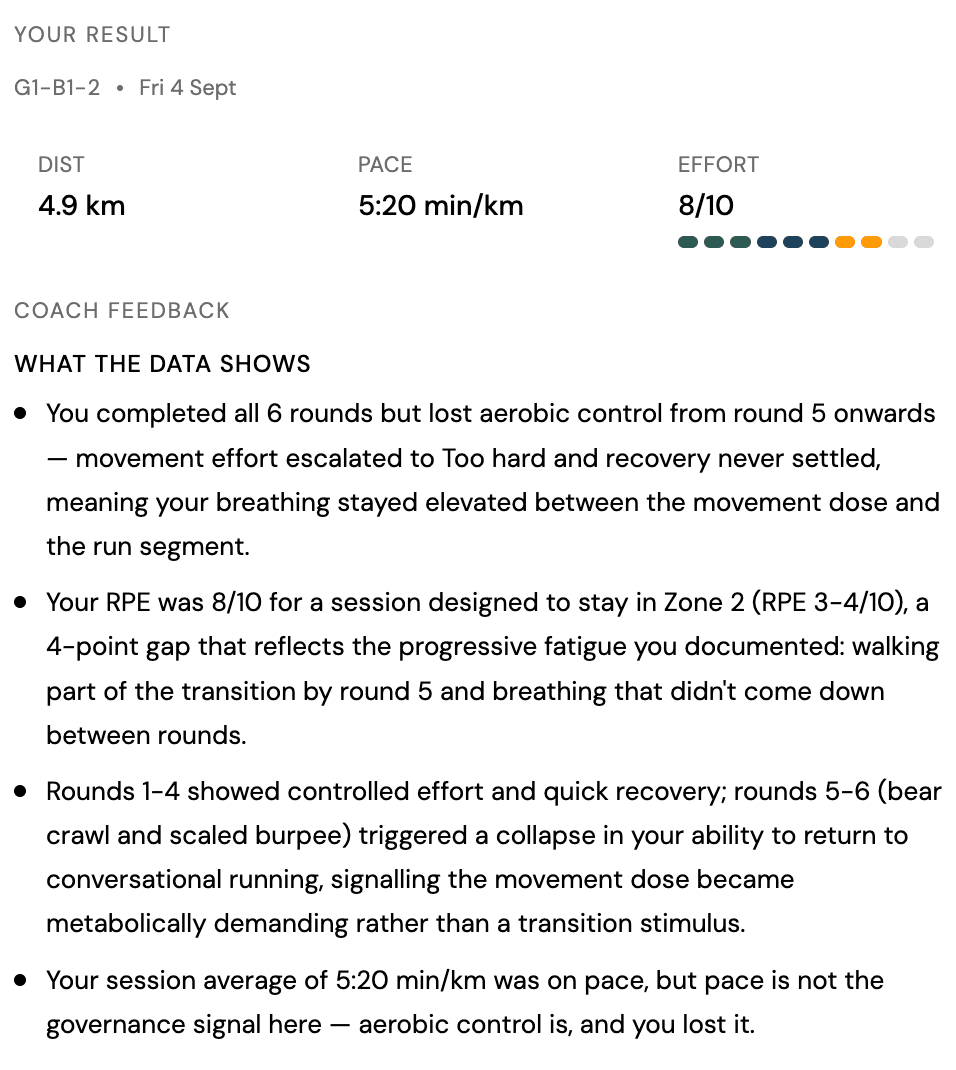
Read every session.
STEADY reads what happened inside the session, not just the average. Where the pace held, where it slipped, and what that means for the next one.
Who it’s for.
Road runners
You’re training, but you’re not sure it’s working.
STEADY reads your real sessions, including effort, pacing and missed runs, then shows what to adjust.
Hyrox athletes
Built for compromised running.
Your pace under station fatigue decides your finish time. STEADY trains specifically for that gap, not just your fresh kilometre pace.
Log however you want.
Upload workout files, add screenshots from your watch, or log manually. No specific watch required.
Get a coach that actually reads what you do.
Best for runners and Hyrox athletes currently training toward a real pace, distance, or race goal. We’re bringing on a small group each week.
Frequently asked
No. STEADY works best with a measurable goal: 6 km at 5:00/km, 10 km at 4:30/km, or a target Hyrox run split. A race gives that a deadline, but it isn't required.
Your first sessions calibrate the plan. Runners start with one session to anchor current pace. Hyrox athletes do two: an easy run, then a compromised-running session that captures both a fresh kilometre and your pace across repeats once fatigue sets in. The gap between those two numbers shapes everything after. From there the plan is built on what you ran, not what you typed in.
No. STEADY is a structured training system: goal feasibility, 4-week blocks, session feedback, block retrospectives, and Hyrox calibration. Each piece is built around your logged training data, not a one-off chat conversation.
Four weeks. When a block ends, you answer a few questions about how it went: how the block felt, and anything that got in the way. STEADY combines that with everything you logged and builds the next block from it. The plan doesn't restart each block; it compounds.
Running plans mix easy aerobic work, longer runs, and harder sessions like tempo, intervals and progression, with the balance set by your goal and how far out it is. Hyrox plans are running-focused throughout. STEADY doesn't prescribe station work; it assumes you're doing that already and builds your running around it. That includes compromised running, where you run on legs that are already tired.
Yes. Each session comes with a target pace where one applies, the structure to run, and why that session exists at this point in your plan. After you log it, STEADY compares what you actually ran against what was prescribed.
Log it honestly. STEADY treats missed sessions, high effort, poor pacing, and flagged niggles as signals, not failures. Your coaching feedback and future blocks are shaped by what happened.
Edit your goal when it changes. STEADY checks it against what you've actually been running. If the timeline no longer works, you'll see that, with alternatives: a later date or an adjusted pace. If it does work, the plan simply rebuilds around it. Your training history carries forward either way.
A spreadsheet can store a plan. STEADY reads your logged sessions, compares them with what was prescribed, tracks how the block is going, and uses that context when giving feedback and building the next block. You still do the training — STEADY does the interpretation work.
No. If you have a good coach who knows you and watches your training closely, keep them. STEADY is built for runners and Hyrox athletes who do not have that level of coaching, but still train seriously enough to need structure.
No. Upload a .fit, .gpx, or .tcx file, add screenshots from your watch or app, or type it in. Nothing syncs automatically. Direct watch sync is not part of the beta yet.